
In the News
Selected quotes from Carver College of Medicine faculty featured online and in the news media.
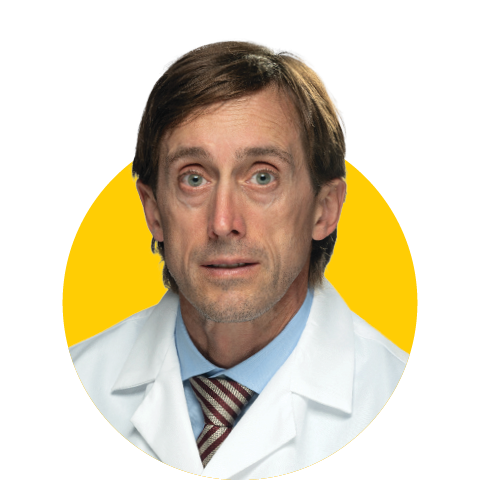
We’ve known it’s safe for quite some time now, but there were still some old-school coaches that were a little resistant to getting younger kids into the weight room. I think people are starting to realize that it works.”
Andrew Peterson, MD, MSPH, a sports medicine physician and clinical professor in the Stead Family Department of Pediatrics, adds perspective to a New York Times story on kid fitness influencers who lift heavy weights. The story notes that until about 20 years ago, medical experts advised children not to participate in weightlifting for fear that it could damage their growth plates and stunt their development. But research has shown that strength training can be safe for children who are old enough to follow directions and are closely supervised by a trainer or coach. Peterson was a co-author of an American Academy of Pediatrics report from 2020 that recommended resistance training for young children and adolescents to prevent and recover from sports injuries and improve their overall fitness.

“That was the gene that launched 1,000 ships.”
In an article published in Scientific American, Jacob Michaelson, PhD, professor in the Department of Psychiatry, refers to a mutation in a single gene, called FOXP2, that scientists in 2001 identified as the cause of a rare speech disability. At the time, it was believed the gene could be the key to understanding how humans evolved language. Since then, FOXP2 does not appear to be single-handedly driving human language abilities. New research led by Michaelson found that specific genetic regulatory sequences have an outsized impact on humans’ language abilities and that these sequences — known known as human ancestor quickly evolved regions — evolved before humans and Neanderthals diverged. Michaelson’s research was published in April in Science Advances.
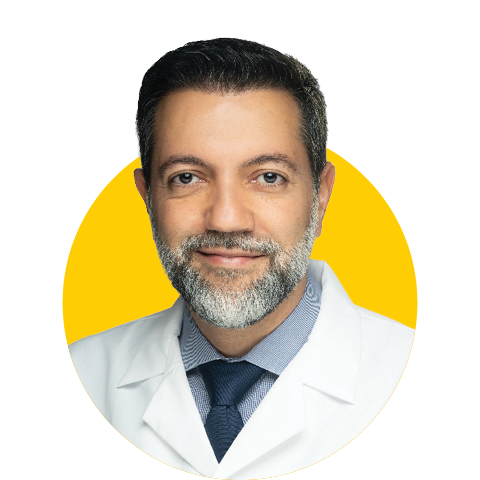
“Alcohol does not appear to directly accelerate metastatic bladder cancer progression, but it can worsen dehydration, fatigue, poor nutrition, and liver problems, all of which may affect quality of life and tolerance of treatment.”
Medical oncologist Fernando Maciel Barbosa, MD, clinical associate professor in the Department of Internal Medicine, discusses the risks of alcohol consumption by patients with bladder cancer for Everyday Health, an online medical news source.
News Briefs
U.S. News & World Report rankings for 2026-2027 that list University of Iowa Health Care programs and services, including the Carver College of Medicine:
“Best Medical Schools”
- Physician Assistant: No. 1
- Physical Therapy: No. 2
- Research: Tier 2
- Primary Care: Tier 3
- Most Graduates Practicing in Rural Areas: No. 28
- Most Graduates Practicing in Health Professional Shortage Areas: No. 46
- Most Graduates Practicing in Primary Care: No. 124
“Best Hospitals”
- Ophthalmology: No. 6
- Obstetrics and Gynecology: No. 39
- Cancer: High-Performing
- Gastroenterology and GI Surgery: High-Performing
- Orthopedics: High-Performing
“Best Children’s Hospitals”
- Neonatology: No. 22
- Pediatric Nephrology: No. 23
- Pediatric Diabetes and Endocrinology: No. 33
- Pediatric Urology: No. 45
University of Iowa Health Care leaders announced appointments to several key positions over the spring and summer:

David Lee, MD, was named director of the UI Health Care Organ Transplant Center and division director of transplant surgery in the Department of Surgery, effective Dec. 31. Lee will join UI Health Care from Beth Israel Deaconess Medical Center in Boston, where he serves as surgical director of one of the nation’s leading liver transplant programs and is a member of the faculty in the Department of Surgery. He also holds an appointment as an associate professor of surgery at Harvard Medical School. Previously, he served as surgical director of kidney and pancreas transplantation and held leadership positions at Loyola University Medical Center, Mayo Clinic, and Virginia Commonwealth University.

Darren Hoffmann, PhD (06PhD), is the associate dean for graduate and postdoctoral studies – admissions and educational development. He will focus on admissions, recruitment, educational development, and core curriculum. Hoffmann is an associate professor in the Department of Anatomy and Cell Biology and served as interim associate dean for graduate and postdoctoral studies since June 2025.

Craig Ellermeier, PhD, is the associate dean for graduate and postdoctoral studies – research career development. He will focus on research training, trainee mentorship, scientific leadership, research rotations, and career development programming for graduate students and postdoctoral scholars. Ellermeier is a professor in the Department of Microbiology and Immunology, and was director of the department’s graduate studies program.

Brian Wolf, MD (02R, 06MS), is the chair and department executive officer of the Department of Orthopedics and Rehabilitation. He had served as interim chair of the department since Jan. 31. An orthopedic surgeon and head team physician for UI Athletics, Wolf had previously served as the department’s vice chair of operations and strategic planning. He also served as vice chair of academic affairs and finance, and he played a key role in the planning and opening of UI Health Care’s North Liberty campus. He is a member of the board of directors of the American Board of Orthopaedic Surgery and the American Orthopaedic Society for Sports Medicine.

Marta Van Beek, MD (97MD, 01R, 03F) is the executive medical director of ambulatory services for UI Health Care. In this role, she will drive and support alignment and consistency across all ambulatory sites to guide access, patient experience, and patient-centered care. Van Beek had served in a similar position supporting the university campus ambulatory clinics for the past four years. A faculty member at Iowa since 2003, she served as UI Health Care medical chief of staff from 2015 to 2021. Van Beek is a clinical professor in the Department of Dermatology, and she also serves as a trustee on the board of the American Medical Association.

Three University of Iowa programs now share a new, state-of-the-art facility. The Health Sciences Academic Building houses the College of Liberal Arts and Sciences Departments of Communication Sciences and Disorders and Health, Sport, and Human Physiology, as well as the Carver College of Medicine Department of Physical Therapy and Rehabilitation Sciences.
Advanced technology has been built into the building’s infrastructure, giving physical therapy students access to equipment used in leading rehabilitation clinics across the country. Among the new resources is an AI-based suspension system that supports research involving amputation, movement disorders, fall prevention, and athletic performance.
Richard Shields, PT, PhD, chair of the Department of Physical Therapy and Rehabilitation Sciences, says the new building allows the department to invest more deeply in research, strengthen collaboration, and pursue grants.
“One reason we are one of the top physical therapy and rehabilitation sciences departments in the country is because of the commitment from our faculty, staff, and students,” Shields says. “Our success reflects strong leadership and support around us, including the vision that made this new space possible.”
In late July, University of Iowa Health Care and Mission Cancer + Blood, part of UI Health Care, were approved to administer a promising new drug, daraxonrasib, to patients undergoing treatment for metastatic pancreatic cancer.
When the results of a phase 3 clinical trial for daraxonrasib were announced at the American Society of Cancer Oncology annual meeting in May, they were greeted with a standing ovation. The drug, which was fully approved by the Food and Drug Administration in August, has been hailed as a groundbreaking advance that could dramatically change the outlook for patients with pancreatic cancer.
Also in August, the FDA granted accelerated approval for TUDRIQEV,TM a viral therapy previously called “RP1,” in combination with nivolumab for advanced melanoma. This oncolytic virus breaks up tumors and makes them visible and vulnerable to the patient's own immune system.

UI Health Care cancer researchers, led by medical oncologist and melanoma expert Mohammed Milhem, MBBS, have spent years studying the use of oncolytic viruses in combination with immunotherapies to improve outcomes for patients with melanoma that has metastasized. Milhem helped lead the phase 3 clinical trial that provided data showing that the new treatment benefited patients with no other options, and he provided his expert opinion directly to FDA officials as they made their decision.
A second melanoma breakthrough was announced in mid-August: positive results from a phase 3 clinical trial of a new personalized cancer vaccine against advanced melanoma. Again, UI Health Care was a leader in bringing this therapy to patients as one of the first sites in the country to participate in the clinical trial, starting in 2024.
A key feature of these vaccines, developed by Moderna and Merck, is that they are tailored to target each patient’s unique tumor. Genetic information from the tumor is used to create a personalized vaccine that will teach the patient’s own immune system to target tumor cells wherever they are in the patient's body.
Every breath you take does more than deliver oxygen – it helps organize activity throughout the brain. University of Iowa neuroscientists have shown, for the first time, that the rhythm of breathing synchronizes widespread brain activity in humans whether they are awake, asleep, or even breathing via a mechanical ventilator. This synchronization suggests that breathing serves as a fundamental organizing signal for widespread human brain networks.

Led by Brian Dlouhy, MD (13R, 14F), associate professor of neurosurgery, and published in Nature Communications, the study is the largest direct human intracranial study of breathing and brain activity, with recordings from more than 1,200 brain sites.
Dlouhy and his team worked with patients who were undergoing surgical treatment for epilepsy. Neurosurgeons seeking to determine the location of seizure activity within the brain used intracranial electroencephalography, a specialized procedure that uses implanted electrodes to record electrical activity directly from the human brain.
The findings open new avenues for exploring the connection between breathing and brain functions and diseases including emotion, cognition, sleep disorders, and epilepsy.
Carver College of Medicine leaders recently announced a bold strategy aimed at revitalizing Iowa's medical research environment over the next five years.
“Research is central to our academic health system,” says Denise Jamieson, MD, MPH, vice president for medical affairs and the Tyrone D. Artz Dean of the Carver College of Medicine. “The focus is on supporting the researchers who are advancing medicine today while building the research enterprise of tomorrow.”
The renewed focus reflects the college’s commitment to creating an environment where science can thrive. It has three areas of focus: enhancing available resources and infrastructure, fostering the growth of current early- and mid-career researchers through new funding opportunities, and enabling recruitment of top talent. Additional priority will be given to research programs related to neuroscience, cancer, metabolic disorders, immunology and inflammation, and lung health.
“This is about investing in the people and infrastructure that makes great research possible here,” says Patricia Winokur, MD, the college’s executive dean. “This strengthens our academic mission by giving our faculty and students the infrastructure and support to do their best science.”
Researchers from the University of Iowa and Iowa City Veterans Affairs Health Care System have developed a new way to look more closely at how hospitals prescribe antibiotics — and what may be driving differences in antibiotic use between hospitals.
The study was led by infectious diseases specialists Michihiko Goto, MD (13F, 14F, 14MS, 25MS), and Daniel Livorsi, MD, both associate professors in the Department of Internal Medicine, and Shungo Imai, MD, PhD, who contributed to the work during his time as a postdoctoral research scholar at Iowa.
Published in June in Clinical Infectious Diseases, the study introduces a framework to evaluate three decisions that shape antibiotic prescribing: whether treatment is initiated, how long it continues, and whether the selected antibiotic has a broad or narrow spectrum. The team applied the framework to data from all 118 acute-care hospitals in the Veterans Health Administration, covering more than 700,000 patients, to demonstrate how this novel framework can be applied in the real world academic medicine.
Annual events a rite of passage for first-year students
August is a time of new beginnings on the University of Iowa campus, and first-year students in the Carver College of Medicine’s MD, PA (physician associate), and PhD programs were welcomed with white coat ceremonies commemorating the first step of their health professions education.
The White Coat Ceremony for medical students, established in 1993 by the Arnold P. Gold Foundation, is a celebrated tradition at medical schools nationwide that marks students' entry into medical school. In the presence of family, guests, and faculty members, students are welcomed by leaders of the college and ceremonially “cloaked” with their white coat. The students then stand to recite the Oath of Hippocrates.
In the 1990s, the Carver College of Medicine was among the first institutions to implement the White Coat Ceremony for its MD students. In ensuing years, ceremonies celebrating students entering the college's physician associate and biomedical sciences graduate programs were added to recognize the critical importance of these professions.
These events encourage students to accept the responsibilities inherent to a career in health care and reflect the relationship between health professionals and patients. They are also a meaningful rite of passage, giving students a moment to celebrate their accomplishments as they begin a career in service of others.
PROFILE: FIRST-YEAR MD CLASS
153 MD students
- 114 Iowa-affiliated
- 27 from rural backgrounds
- 11 with advanced degrees
- 514 median MCAT score
- 3.87 mean total GPA
PROFILE: FIRST-YEAR PA CLASS
- 25 PA students
- 4 first-generation college students
- 12 home states (9 students from Iowa)
- 3.85 mean total GPA
PROFILE: FIRST-YEAR BIOMEDICAL SCIENCE PROGRAM CLASS
- 74 PhD students
- 55 undergrad institutions represented
- 22 home states represented
- 3.72 mean GPA
Effective July 1, Iowa law changed the professional title of “physician assistant” to “physician associate.” Iowa is the fourth U.S. state to enact this change.
While education, licensure, and clinical responsibilities for PAs are not affected, the name change better reflects the role these health professionals play on today’s health care teams. PAs help create greater access to care, improve the patient experience, and teach students and trainees.
In the Carver College of Medicine, the change is reflected in a new name: the Department of Physician Associate Studies and Services. The PA program at Iowa is tied with Duke University as the No. 1 program in the nation, according to the most current U.S. News & World Report rankings
Paper Trail
Notable manuscripts recently published by Carver College of Medicine faculty.
Science
Xylose phosphatase activity of dystroglycan self-regulates its receptor function
Chandel I, Venzke D, Wollesen BA, Yu L, Campbell KP. Science. 2026 Aug 13;393(6812):690-695. doi: 10.1126/science.adz7427. Epub 2026 Aug 13.
JAMA
Zaidat OO, Al Kasab S, Sheth SA, Rai AT, Ortega-Gutierrez S, Given CA 2nd, Zaidi SF, Grandhi R, Cuellar-Saenz H, Mokin M, Katz JM, Alshekhlee A, Taqi MA, Ansari SA, Siddiqui AH, Barazangi N, Maud A, Kirmani J, Gupta R, Yavagal DR, Tarpley J, Pandya DJ, Cress MC, Dharmadhikari S, Asif KS, Kass-Hout T, Puri AS, Janjua N, Majjhoo AQ, Badruddin A, Spiotta AM, Bhuva P, Salazar-Marioni S, Lin E, Samaniego EA, Kolikonda MK, Jumaa MA, Majoie CBLM, Elijovich L, Jadhav A, Olvany JM, Tariq Z, Brown S, Nguyen TN, Gress D, Dippel DWJ, Smith WS, Yoo AJ; TESLA Investigators. JAMA. 2026 Aug 3:e2612814. doi: 10.1001/jama.2026.12814. Epub ahead of print.
JAMA
Adverse pregnancy outcomes and sedentary behavior, light-intensity physical activity, and daily steps
Barone Gibbs B, Kim J, Gallagher J, Jones MA, Crisp AH, Wilhite K, Smith K, Rahman S, Thrower A, Catov JM, Kline CE, Feghali M, Santillan D, Santillan M, Sheikh I, Zimmerman B, Whitaker KM. JAMA. 2026 Jul 14;336(2):135-143. doi: 10.1001/jama.2026.6986.