Table of ContentsClose
How Community Connect is changing health care in rural Iowa
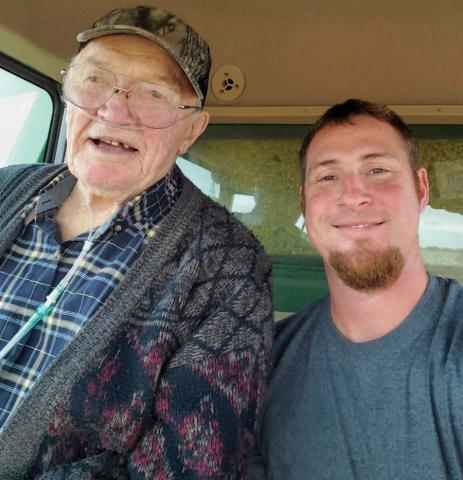
On a chilly fall morning in northern Iowa, Jacob Pergande climbs into his tractor to start another long day in the field. As he rides with the rising sun, he pulls out his phone to join a virtual medical appointment — without leaving his sixth-generation family farm.
“Many rural Iowans live hours away from a clinic, and they aren’t going to stop working to go to the doctor,” says Amber Pergande, Jacob’s wife and the informatics director for Iowa Specialty Hospitals & Clinics, a rural hospital network in north-central Iowa. “Having virtual visits as an option allows people to still receive great care. My husband is a good example of this — he has done a telehealth visit while planting a field.”
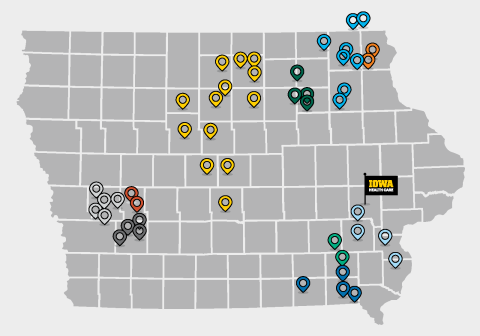
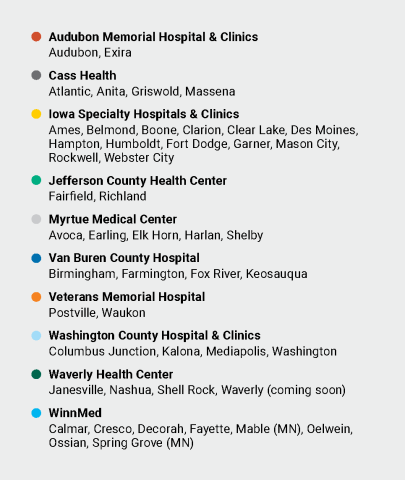
Stories like the Pergande family’s are possible thanks to University of Iowa Health Care’s Community Connect Iowa (CCI) program, which is reshaping what’s possible in rural Iowa. By providing nine hospital systems serving over 40 communities across the state with access to technology and training, the program helps patients get the care they need faster and closer to home — sometimes from the middle of a cornfield.
University of Iowa Health Care Community Connect Iowa Sites
Connecting hospitals — and people — across Iowa
Community Connect Iowa links community hospitals with the same type of Epic electronic health record system used by UI Health Care. Participating hospitals can access components of Epic without having to purchase and maintain the technology on their own. This includes access to electronic inpatient and outpatient records, the MyChart patient portal, and Care Everywhere, which securely shares information when patients receive care at more than one facility.
For patients, it means fewer gaps and smoother handoffs between providers. For rural hospitals, it means greater operational support.
“Growth of this program has meant listening to our CCI sites and adapting,” says Carol Doser, Community Connect Iowa client relations manager for UI Health Care. “Whether that’s expanding services, adding new technology, or improving how we support our customers day to day. The growth of the program has really been driven by collaboration and by staying focused on what matters most: helping our Community Connect Iowa hospitals deliver safe and quality care.”
She adds that smaller, rural hospitals have different needs than a large medical center.
“Understanding those needs — and bridging them — helps improve health care for everyone in the state,” Doser says.
It’s a philosophy that UI Health Care’s technology leaders are carrying forward as the program expands across the state.
“CCI is already an impressive program — it’s nationally recognized for showing how partnership and technology can reach patients in places that would otherwise be limited by geography or resources,” says Joshua Wilda, MPA, chief information digital officer for UI Health Care. “Our goal is to lift the capabilities of community hospitals so they can thrive where they are while enabling UI Health Care to provide more connected support to those regions.”
Technology with heart
Behind the technology is a dedicated team of experts who make collaboration possible.
Dan Rottinger, Community Connect and Rural Health lead at Epic, helps manage the technical side of Community Connect and supports the hospitals that use it. His role is to make sure Epic works smoothly for every partner site — from system updates to training and troubleshooting.
“Community Connect isn’t just about technology,” Rottinger says. “It’s about helping health care organizations succeed and making sure every hospital — no matter its size — can deliver care with confidence.”
Epic’s shared electronic health record allows providers in different communities to access up-to-date patient information such as medications and test results whenever and wherever their patients need care. It helps eliminate duplication, reduces errors, and gives patients continuity between hospitals, clinics, and specialists.
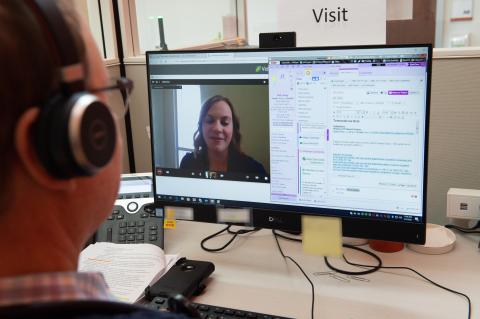
That collaboration extends to hospitals like Iowa Specialty Hospitals & Clinics, where Pergande says the system has changed how care teams and patients stay connected. Through MyChart, patients can schedule appointments, message their doctors, review results, and even hold video visits from their homes.
“Having access to Epic allows us to work together more efficiently,” she says. “It’s brought our patients and providers closer than ever before.”
Brad Haws, MBA, associate vice president and chief executive officer of UI Health Care’s clinical enterprise, says that focus on collaboration drives the program forward.
“This is about partnership — creating a network that supports local providers and patients where they are,” Haws says.
Hospitals across Iowa share that same story of impact. Each one is independently run but connected to UI Health Care through the Community Connect Iowa program, giving them access to the same technology and support used by the state’s leading academic medical center.
Real results, real partnerships
At Cass Health in Atlantic, leaders say the program has given their hospital access to the kind of technology typically found only in large health systems. Through Epic, they’ve been able to streamline care transitions, improve patient engagement, and make the hospital more attractive to new physicians who want to work with familiar, advanced tools.
At Washington County Hospital & Clinics, leaders describe a similar experience. Since becoming a Community Connect Iowa site, the hospital has gained not just an advanced electronic medical record but also a partnership with UI Health Care and peer hospitals across the state.
“What’s really powerful about CCI is that it lets smaller hospitals stay independent, but it gives them access to the same tools and expertise that we use,” Haws says. “It’s a way to raise the standard of care everywhere without losing what makes those hospitals unique.”
Looking ahead
As the program continues to grow, interest remains strong. New hospitals are waiting to join, and existing partners are exploring ways to expand what they can do together.
Haws sees even more opportunities to use technology to strengthen this collaboration.
“There’s so much potential in how we can use data to help these hospitals work smarter, especially as AI and analytics become part of everyday care,” he says.
That same spirit of partnership will guide how Community Connect Iowa evolves in the coming years, according to Wilda.
“The next step is to use technology to identify new opportunities to collaborate across the state,” Wilda says. “When we intentionally improve together, the bridge becomes more than a connectivity path — it becomes a network of shared strength.”